Showing posts with label island. Show all posts

Monday, June 05, 2017

Missing Samui Island

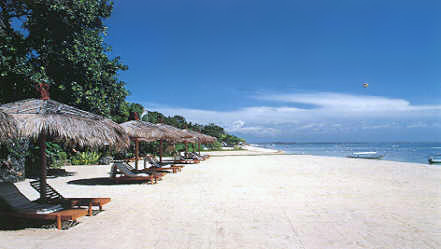
I’m writing this while laying on coffee shop in heart of bangkok and think about chilling on the beach scenes. I never forget how beautiful the Samui Island is. I was tripped to southern of Thailand via car for 700 kilometers from Bangkok to Surat Thani province. Yeah, It’s overnight for journey to there.

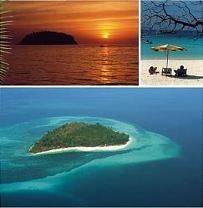
Finally, I reached the edge of the land for across the sea to Island by ferry. It’s not too spend the time to there. And when i step on the island, the first thing i can feel, The Fresh Air. Sure, You never find this in the big city like bangkok. That’s my first impression, the air tune my mood to relax and left all stressful to behind. I was saw the sand and sea with blue sky in sunny day around the Samui Island. After I loaded my bag to room, I straightened to the Chaweng beach, I was laying there and never think the time, just saw the white sand and blue sky and sea, listened the wave sound and felt the wind. I miss there and I will visit again. See You.


Samui Island beach

Info:

GPS : 9.53567 99.93567

Highlight: The usual panoply of watersports are available, including a lot of dive shops, but most diving nearby Ang Thong National Marine Park or Ko Tao as the visibility around Samui’s sandy beaches tends to be poor.  The dive boats tend to leave from the pier at Bophut and Bang Ruk.
Beaches: Samui is a fairly big island. The most popular and commercialised beaches are Chaweng and Lamai, while the northern beaches and their adjacent villages of Mae Nam, Bophut, Bang Rak (Big Buddha) and Choeng Mon are more peaceful choices, and the west coast beaches are still (comparatively) quiet.

Wednesday, June 17, 2009

Penang


Penang is a state in Malaysia, located on the northwest coast of Peninsular Malaysia by the Strait of Malacca. Penang is the second smallest state in Malaysia after Perlis, and the eighth most populous. A resident of Penang is colloquially known as a Penangite.


The Betul Nut Tale

Before Penang, the Pearl of the Orient, was known to the world as a beautiful, exotic holiday destination, she was Pulau Pinang – a virgin paradise that got her name from the abundance of betel nut palms scattered across her soft, sandy beaches.

Literally translated, Pulau Pinang means the “Isle of the Betel Nut” in Malay – Malaysia's national language. Steeped in history, “Penang” was born when charismatic English captain Francis Light persuaded the Sultan of Kedah to cede Pulau Pinang to the British East India Company.

In 1786, Light landed on what is known as the scenic Esplanade today. Local folklore tells of how he fired gold coins into the surrounding jungle to induce his men to clear the area. Fourteen years later, the Sultan of Kedah further ceded a strip of land on the mainland across the channel to a very persuasive Light.

The state of Penang then comprised of an island originally named Prince of Wales Island, after George V, and the strip on the mainland which was christened Province Wellesley, after the Governor of India. The former was later named George Town, after King George III.

In 1832, Penang formed part of the Straits Settlement with Malacca and Singapore. The Penang maritime port was among the busiest in the region, attracting rich merchants involved in the lucrative trade of tea, spices, porcelain and cloth.

Settlers and fortune-seekers from the all over called Penang home and it was from this interesting mix of Chinese, Malay, Indian and Siamese (to name a few) cultures that Penang became a melting pot for hybrid communities – the most famous being the Baba Nyonya, Jawi Peranakan and Eurasians.

For more than a century, the major trading post remained under British colonial rule until 1957, when Malaysia gained independence. George Town was accorded city status by Queen Elizabeth II on January 1, 1957, thereby becoming the first town in the Federation of Malay – after Singapore – to become a city.

Although she is Malaysia's electric and electronic manufacturing hub, Penang has successfully retained her old world charm. As recognition of her rich heritage, George Town, together with Malacca, was listed as the United Nations Educational, Scientific and Cultural Organization (UNESCO) World Heritage Site on July 7, 2008.

Geography


Situated along the north-western coast of the peninsula, Penang is Malaysia’s only “island state”. Locals are fondly known as Penangites, many of whom will proudly tell you that the state comprising a population of approximately 1.5 million, is a close-knit community of diverse ethnicities, cultures and dialects.

One of Malaysia’s premier holiday destinations, the 285km2 island is separated from Seberang Prai (formerly Province Wellesley) – a hinterland of 737km2 on the mainland, by a narrow 3km channel.

You can either cross the channel via the iconic Penang Bridge or by the ferry – the latter being a “must experience” simply because it is synonymous with holidaying here. Soon, visitors will have the option of using the new Second Penang Bridge which is expected to be completed in 2011.

Cities

The Island

  • Georgetown - The capital of Penang; a favorite spot for tourists as it has many quaint pre-Second World War houses, as well as 19th century churches, temples, mosques, and colonial buildings. The city was listed as a UNESCO World Heritage Site in July 2008.
  • Batu Ferringhi - Located on the north coast, with white sandy beaches, luxurious hotels & restaurants. A favorite spot for both locals & tourists.
  • Bayan Lepas - Penang's main electronic manufacturing area and location of its international airport.
  • Balik Pulau - Literally "Back of The Island" in Malay; a small agricultural centre surrounded by Malay villages, fruit plantations, and padi fields.

Peninsula

  • Butterworth - The mainland gateway to Penang.
  • Bukit Mertajam - The capital of Seberang Perai Tengah district.
  • Bandar Perda - A new town of Seberang Perai Tengah which is 20 minutes from Butterworth & 15 minutes from Penang Bridge.
  • Nibong Tebal - The capital of Seberang Perai Selatan district.
  • Simpang Ampat - A small town in the district of Seberang Perai Selatan, famous for its nearby seafood at Bukit Tambun and Batu Kawan.
  • Seberang Jaya - Satellite township in the district of Seberang Perai Tengah.
  • Tasek Gelugor - A small town which is 20 minutes from Butterworth.

What to See

  1. All the major heritage buildings and clanhouses in the George Town inner city!
  2. Thee Kong Tua (Jade Emperor’s Temple) in Air Itam
  3. Penang Hill
  4. Kek Lok Si Temple
  5. Reclining Buddha (Wat Chayamangkalaram)
  6. National Park (Muka Head)
  7. Toy Museum
  8. Tropical Spice Garden (it’s the only spice garden in South East Asia)
  9. Snake Temple
  10. Butterfly Farm

The Economy


From the 1970s to the late 1990s, the state’s Free Trade Zone in the Bayan Lepas area was one of Asia’s largest electrical and electronics manufacturing bases. The area south of the island is now the Bayan Lepas Free Industrial Zone. Key exports include electrical and electronic products, semi-conductors, computer products, medical devices, textiles, gold and jewellery.

Penang’s medical tourism and education sectors continue to grow steadily as the state’s industrial sector moves towards high-end manufacturing activities and up the value-chain. The service sector driven by knowledge-based workers is the next frontier as the state focuses on research and development and innovation.

The People and the Language


Penangites comprise mainly of three main ethnicities – the Chinese, Malays and Indians. Penang is the only state in Malaysia with an ethnic Chinese majority which explains why many Chinese cultural and religious festivals are celebrated here on a large scale.

Nonetheless, the Malay and Indian communities' influence form the very essence of the state and this is evident in many of the buildings, food and local dialects.

Although Bahasa Malaysia or Malay is the national language, English is widely spoken here. Many tourists are surprised and impressed by the level of proficiency.

What makes Penang unique however, is the Hokkien dialect spoken by the Chinese community. Unlike in other states, the more popular Cantonese and Mandarin take a backseat to the unique Hokkien dialect brought here by the early Chinese settlers from the Fujian Province in China.

Penangites are a friendly lot and are more than happy to share their knowledge on local customs and must see places – indeed, nothing beats a local's perspective!

The Weather

Sunny weather beckons all year round (well, almost!). Except for the monsoon months from August to October, it is bright and cheerful in Penang. However, travelers not used to Asia’s hot and humid climate should pack a cap, water bottle and cool pair of shades when out exploring!


____________________


How to get there

By plane

Recently refurbished Penang Bayan Lepas International Airport (IATA: PEN) is one of Malaysia's larger and better-equipped airports, operated by Malaysia Airports. The airport is connected to virtually all of Malaysia's major cities via domestic airlines Air Asia, Firefly and Malaysia Airlines, and also has frequent service to nearby international hubs including Bangkok (Thailand), Hong Kong, Medan (Indonesia) and Singapore. Firefly also operates direct flights to the Thai resort of Phuket.

The airport is on the southeastern coast of the island, some 20 minutes from Georgetown. Contact number:+60 4 643-4411

By train

There are no trains on Penang Island, but many people take the train to Butterworth from elsewhere on the peninsula and then use the ferry (within walking distance from the train terminal) to cross over to the island. You can book the KTMB train tickets at the Penang ferry terminal or the railway station in Butterworth. Contact numbers:

  • Penang jetty +60 4 261-0290
  • Butterworth +60 4 323-7962 / 331-2796
  • Bukit Mertajam +60 4 539-2660

From Thailand:

An overnight train departs Bangkok daily at 2:45PM (Thai time). It is scheduled to arrive at Butterworth at 12:55PM (Malaysian time) but normally gets there late, usually around 2-2:30PM. There is only one fare for an air-con berth that costs 1,210 baht (as of July 2008). The surcharge for a bicycle is 104 baht to the border; a further small freight charge may be made by KTMB for the border-Butterworth leg.

By car

Penang is connected to the mainland and the North-South Expressway by the Penang Bridge one of the longest bridges in Asia.

Toll rate: For vehicles heading to the island from the mainland:

  • Motorcycles - RM1.40
  • Motorcycles with sidecars; commercial vehicles on three wheels; car including station wagon - RM7.00 (RM5.60 for those who hold the Touch 'n Go card that can be purchased from the Penang Bridge toll plaza)
  • Lorries; vans and buses with two axles and four wheels - RM12.00
  • Lorries, vans and buses with two axles and five or six wheels - RM25.00
  • Vehicles with three axles - RM45.00
  • Vehicles with four axles - RM60.00
  • Vehicle with five or more axles - RM75.00

No toll for vehicles heading to the mainland.

By bus

Long-distance buses connect Georgetown to a variety of Malaysian towns. The trip from Pudu Raya, Kuala Lumpur costs around RM 27 (standard 26-seat coach; prices vary by operator) and takes around 5-6 hours. Buses to/from Kota Bharu and Perhentian Islands (Jerteh/Kuala Besut) cost about 26 RM for a 5-6 hours journey. From Johor Bahru in 10h for RM 50. The buses arrive/depart at the new bus terminal at Sungai Nibong, a fifteen-minute ride from the center of Georgetown, and about ten minutes from the airport. From here, a taxi ride to the KOMTAR building costs around RM15-20.

Major coach operators:

  • Konsortium
  • Plusliner / Nice
  • Transnasional
  • Mutiara

By minivan

Minivans service is available between Georgetown and some towns in Thailand such as Ko Phi Phi, Phuket, Trang, Surat Thani, Krabi, Ko Samui, Ko Pha Ngan, Bangkok and Hat Yai on daily basis. Georgetown office is located at KOMTAR bus terminal. Tourist operators usually propose minivan services to the perhentian islands for about 160 RM (boat included). Express buses fares are much better.

By boat

From the mainland The classic way to arrive in Penang, especially if traveling by train, is to take the ferry from Butterworth. The ferry service operator is Penang Port and its operation hour is 5:30AM till 1:00AM (Last departure) daily.

Ferry rates applicable (from Butterworth to Penang Island) are listed below:

  • Pedestrian: Adult - RM1.20 & Children (between 5 to 12 years old) - RM0.60
  • Vehicles: Bicycle - RM1.40, Motorcycle (inclusive of pillion rider) - RM2.00, Trishaw/tricycle - RM3.00, Motorcar (including station wagon, four-wheel drive, three-wheel commercial vehicle, motorcycle with side car) - RM7.70, Lorry (2 axles with 4 wheels) - RM13.20, Lorry (2 axles with 6 wheels) - RM27.50.

From Langkawi

  • Ferry service available from Langkawi Jeti (Jetty) to Penang at 2:30PM and 5:15PM on daily basis. Operated by Langkawi Ferry Services, Tel: +60 4 264-2088 in Penang; +60 4 966-3779 in Langkawi. One-way trip costs RM60 for adult, RM45 for child (3-11 years old) and RM25 for infant (below 2 years old). Return trip costs RM115, RM85 and RM50 respectively. Single trip takes approximately 2 hours and 30 minutes. Advance booking can be made via the web site. Credit cards are not accepted at the terminal, although there are numerous ATMs in the attached shopping mall. The ferry in service is very old and offers no facilities other than simple air-conditioned seating. There is no access to the top, meaning thereby that no sight-seeing on the way is available. There is proper locked storage for luggage at the rear of the ship upon boarding. There is no restaurant. Check-in is at least 30mins before scheduled departure time.

Penang Port also operates Swenttenham Pier on Penang island to handle some of the largest cruise vessels in the world. The following are fleets that routinely stopover at Swenttenham Pier:

  • SuperStar Virgo and SuperStar Gemini operated by Star Cruises
  • Pacific Sky operated by P&O Cruises

From Medan, Indonesia

  • Ferries depart from Medan's port of Belawan to Swenttenham Port or vice versa at 9AM daily. Operated by Langkawi Ferry Services, Tel: +60 4 264-2088 in Penang; +62 61 452-1666 / 452-7555 in Medan. Oneway trip costs RM110 for adult, RM60 for child (3-12 years old) and RM40 for infant (below 3-year old); return trip costs RM180, RM100 and RM50 respectively. Travel duration is about 5 hours 30 minutes.

____________________

Getting Around


Trishaw, taxi, rented car, motorcycle and bicycle or public bus – you choose. Of course there various modes of transportation in the state but it really depends on where you are planning to visit.

If it is within the George Town UNESCO Heritage Site you want to explore, the trishaw is a good bet because all the famous landmarks are just a stone’s throw away from each other. Besides its quaint charm, the trishaw ride is relaxing and a great way to take in the sights. If you would rather walk or cycle, the Penang Heritage Trust (PHT) has a great heritage trail you can embark on.

To travel around the island, the air conditioned Rapid Penang public bus service is quite reliable and their drivers are a helpful lot. Just make sure you have a comprehensive map in hand!

You can also opt to rent a motorcycle or car or hire a taxi for the day if you want to see other landmark attractions outside the George Town inner city enclave.

____________________

Stay safe

  • Don't walk alone in deserted places.
  • Don't accept rides from Kereta Sapu (passenger car / unlicensed taxi).
  • Don't carry valuables in motorbike-baskets.
  • Don't leave valuables in hotel rooms.
  • Don't place valuables on restaurant tables.
  • Do be wary of snatch-thieves - especially when wearing jewelry and/or carrying bags. Some of these felons practice the art of 'ride-by' snatching of ladies' handbags which can result in serious injury to the victim. So ladies: walk against traffic and keep the handbag on the side away from the road or better still - don't carry one.
  • Do be wary of the (sometimes aggressive) long-tail macaques at the botanical gardens.

____________________

Contact

  • Penang Tourism Action Council 56th Floor, KOMTAR, Phone:+60 4 262-0202, Fax:+60 4263-1020 enquiry@tourismpenang.gov.my
  • Tourism Malaysia
o Penang Tourist Centre: Bangunan Penang Port Bhd, Pesara King Edward. Phone:+60 4 261-6663
o Penang Development Corporation Tourism Division: 1 Persiaran Mahsuri, Bayan Baru. Phone:+60 4 643-2111, Fax:+60 4 643-2405
o Tourism Information Centre: Level 3, Concourse KOMTAR. Phone:+60 4 261-4461
o Tourism Malaysia Penang Branch: 56th Floor, KOMTAR. Phone:+60 4 261-0058/ 264-3494. Fax:+60 4 262-3688 mtpbpen@tourism.gov.my
  • Penang Heritage Trust 26 Church Street, Phone+60 4 264-2631. Fax+60 4 262-8421 phtrust@streamyx.com
  • Ambulance / Police: 999
  • Fire: 994
  • Rescue (Civil Defense): 991
  • All the abovementioned numbers: 112 from mobile phones
  • Tourist police:+60 4 222-1522
  • Telegram service: 100
  • International and domestic operator assisted service: 101
  • Directory enquiry service: 103
  • Multilingual international service: 198
Refer: Penang Tourism, Wikitravel

Saturday, June 03, 2006

Bali

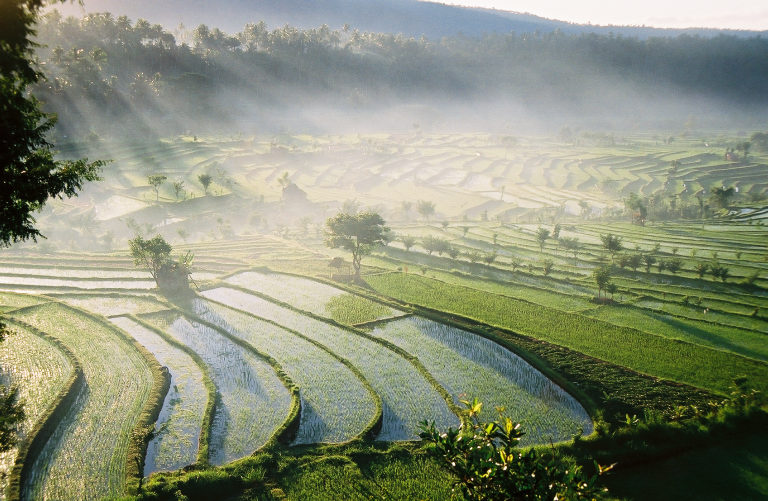
More than four thousands years ago, Bali was an emerald green, tropical rain forest covered the island. The first wave of human arrivals from across the seas brought with them techniques for rice cultivation, new languages and new customs. These early immigrants and others who followed over the years helped to create a haven, providing today's visitors with a wealth of sights and sounds, dances, music, arts and crafts.

The Paradise Island

Bali has been described by many different names - "The Hidden Paradise", "The Last Paradise on Earth", "Morning of The World", "Island of God", and "Island of Thousand Temples". This Island of Gods is situated approximately on latitude 8ฐ South and longitude 115ฐ East. Bali and the neighboring island of Lombok are the most westerly of the Little Sunda Islands and part of the 13,700 islands that make up Indonesia, the largest archipelago in the world.

The island itself covers an area of 5,632,860 square kilometers, with a volcanic mountain range that stretches from the western tip to the eastern side of the island, with Mt. Agung being the highest peak.

For many centuries, -until today-, Bali has attracted visitors from all over the world. It is so attractive for its colorful ceremonies, natural scenery, and the ever-smiling people. Their colorful religious festivals and ceremonies, the traditional music and dances have been a way of life, and have unwittingly contributed much to the success of tourism here. The Balinese people are predominantly Hindu and their traditional and religious beliefs are as strong today as they ever were.

Bali, The History

In 7th century, perhaps Bali was predominantly Buddhist. Yi Tsing, a Chinese scholar, on his trip to India in 670 AD reported that he visited a Buddhist country called Bali.

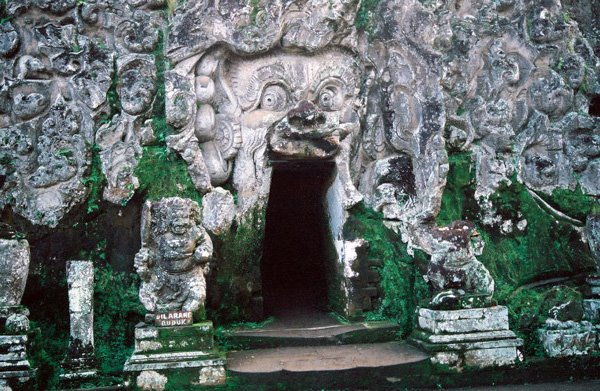
The old Balinese kingdom got its glory at 11 century. There is a monument called Gunung Kawi (means The Poet's Mountain) which houses several royal tombs of noblemen and kings of the 11th century. At this period Bali was governed by king Dharmodayana Warmmadewa, also known as Udayana and his wife -a Javanese Queen- named Gunapriyadharmapatni, also known as Mahendradatta. They sent their son Airlangga to study in the Emperor of Java. He at last became the king in Java and rebuilt a new kingdom with two autonomous province Java and Bali. He then appointed his brother, Anak Wungsu, as ruler of Bali. This was the period when the old Javanese language, Kawi, became the language used by the aristocracy, as well as one of the many Javanese traits and customs adopted by the cause.

In 1284, the East Javanese king Kertanegara conquered Bali and ruled over it from Java.

In 1292, king Kertanegara was murdered. Bali got its freedom for about fifty years.

In 1343, a brilliant General named Gadjah Mada from Majapahit - a powerful empire of east Java- with his strong armies came to invade this island. And the glorious period would come to an end. Though he conquered Bali but the General made Bali became an important part of this East Java Empire. This Hindu Majapahit Empire gave Bali the form and structures that stand to this day. The caste system which is still strong until today, the rules and rituals, the arts, the architecture of house and the temple were all passed on from this powerful empire.

But when Islam successfully gained followers and then gained foothold throughout Sumatra and Java in the 15th century, this powerful Hindu Majapahit Kingdom at last collapsed in 1515 and went into gradual decline. But this new religion was not easily accepted by the people of the kingdom. At the time there were large numbers of Hindu priests, artists, noblemen and Hindu followers which left Majapahit and then escaped to Bali. Here they blended their belief with the traditions of the local people. This blend became the embryo of the Hindu now in Bali. This was the period when "gamelan" - Balinese music instrument, dances, the art of drama and opera (the Gambuh and Arja) and the shadow puppet (Wayang Kulit) would develop and flourish. But this period of the rise of Islam was also the time when the first westerners were beginning to appear which at last built their colonization in this part of the world.

The first European came to visit Bali was the Dutch Admiral, Cornelis De Houtman. He and his troop arrived off the coast of Bali in 1598 and friendly welcomed by the king Watu Renggong who was the king of united Bali. Encouraged by this gesture the Dutchmen baptized this island "Jonck Hollandt" or the New Holland. Since this period the influence of the Dutch grew over the archipelago. But with the death of Watu Renggong, the other rulers would rule independently while still paying homage to the Dewa Agung, the king of Klungkung.

In 1840 Dutch successfully began to control the northern part of Bali. Starting from this area then the Dutch took over and occupied the all island.

The Dutch troop with their modern weaponary was too strong for the ill local forces. But they did not want to surrender. So the local kings led their followers in "puputan" - fight until dead. They faced the Dutch troop with their traditional weapon. Those were still standing killed by their own followers, or they killed themselves in order to assure their heavenly path to the glorious paradise to join their ancestors.

This "Puputan" happened between 1906 and 1908 when the kings of Denpasar and Klungkung chose this path than surrender. After this "Puputan", Dutch could successfully control this island.

During the World War II the Dutch were expelled by the Japanese, then occupied Indonesia from 1942 - 1945. On February 19, 1942, the Japanese landed about 500 troops on Sanur beach to occupy Bali.

Though the Japanese occupation was only for three years, but it strongly inspired the people to get the freedom. Some days after Nagasaki and Hiroshima were completely destroyed by atomic bomb, a famous young leader named Soekarno who was part of Balinese declared the independence of Indonesia on 17 August 1945. Balinese people are proud to be the part of this new country.

____________________

How to get there

By plane

Most visitors will arrive at Denpasar's Ngurah Rai international airport, which has extensive domestic connections as well as direct flights throughout Asia and Australia. In addition to the usual suspects, a few specialist airlines like Qantas subsidiary Australian Airlinesoperate cheap flights from Australia to Bali. In the low-cost carriet set, Jetstar Asia operate from Singapore while AirAsia operate daily direct flights to Denpasar from Kuala Lumpur and Jakarta

Note that if you are flying internationally out of Ngurah Rai, you are then subject to the airport tax (100,000 Rupiah as at Jan '06) which you would need to pay for in Rupiah so save some bills for the trip out. ATM machines are available at Airport Departure Lobby which accept Cirrus and Plus cards for withdrawals.

By boat

Ferries cross from Gilimanuk in western Bali to Ketapang on the island of Java every 15 minutes, 24 hours a day, and the crossing takes just 30 minutes (plus waiting around, loading, unloading, etc).

There are also services from Padangbai to Lembar (Lombok) every few hours, with the trip taking around 3.5 hours.

____________________

Get around

Bali's a fairly big island and you'll need a method to get around if you plan on exploring more than the hotel pool.

By taxi

Metered taxis are very common in southern Bali up to Denpasar but not available elsewhere. The starting fee is Rp 4,000 for the first two km and the meter ticks up Rp 2,000 per kilometer afterwards. Waiting time is Rp 20,000 per hour. Trips outside southern Bali will incur an extra charge of 30%, as the driver has to go back empty — if day-tripping, it's often cheaper and more convenient to arrange for your driver to wait and take you back.

By bemo

Bemos, basically minivans which serve as a flexible bus service, are Bali's "traditional" form of transportation, but they have largely given way to metered taxis in the south. Fares on shared bemos can be very cheap, but drivers will often insist that foreign tourist charter the entire vehicle, in which case they'll usually ask for taxi prices or worse.

By car or bike

Car and motorbike rental is available, but may not be safe for drivers used to more formal traffic rules. Consider hiring a car and driver as you can relax, be safe, and not get lost.


More Rome Information / Facts

* Country: Indonesian
* Area: 5,632.86 km²
* Population: 3,150,000
* Country population: 222,781,000
* Language: Balinese, Indonesian
* Currency: Indonesian Rupiah (IDR)
* Time zone: WITA (UTC+8)
* Country dialling code: +62
* Internet TLD: .id
* Religion: Hindu, Muslim

Refer: Wikitravel, balinicerate

Wednesday, May 31, 2006

Phuket

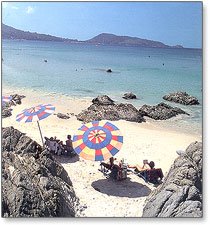
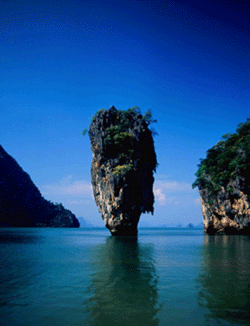
Located approximately 862 kilometers south of Bangkok is Phuket, Thailand's largest island, which is often dubbed as the pearl of the Andaman, or the pearl of the south. Its natural resources- rocky peninsular, limestone cliffs, white powdery beaches, tranquil broad bays and tropical in-land forests contribute to making it the South's wealthiest, busiest, most visited and most popular island and province.

Nestled in the tropical zone off the west coast of the southern part of Thailand in the Andaman Sea and the Indian Ocean, the province covers an area of approximately 543 square kilometers (excluding small islets). It is estimated that Phuket Province covers an area of approximately 590 square kilometers if its 39 other small islands are included. The islands total length, from north to south, is estimated at 48.7 kilometers and approximately 21.3 kilometers wide.


Phuket borders on Phang-nga Province to the north. The other 3 sides are encircled by the Andaman Sea the place where many of the best diving sites are located. The island is connected to Phang-nga Province by Sarasin Bridge and Thep Krasattri Bridge.


Staying on the island is easy, as there are only two seasons in a year - the rainy season (May to October) and the hot season (November to April). Visitors are not recommended to travel to Phuket between September and October as they are the wettest months. The best period for a visit, is from November to February, when it is possible to see the clear blue sky, feel the fresh sea breeze and marvel at the crystal clear water while lying on powdery, palm-fringed beaches. Average temperatures ranges between 23°C and 33°C.


Phuket's topology is exceptional with 70 percent of its area covered with mountains which stretch from north to south and the remaining 30 percent being plains located in the central and eastern parts of the island. The island does not have any major rivers except for a total of 9 brooks and creeks.


Phuket is divided into 3 administrative counties namely Amphoe Muang, Amphoe Thalang and Amphoe Kathu.


Phuket has a lot more to offer its visitors other than its natural heritage sea, sand, sky, beach, forest, and world renowned diving sites. Sino-Portuguese architecture casts its spell delighting travelers to the city, while Phuket-style hospitality has never failed to impress visitors from all walks of life. In addition, accommodations ranging from world-class resorts to tropical-style bungalows have warmly catered to the different needs of travelers. For seafood lovers, there is a lot more to sample than just Phuket's famous lobster. Altogether, these characteristics have made Phuket a truly unique destination.


How to get there

By air


This is perhaps the easiest way to get to Phuket. Domestic airlines operate several flights daily between Bangkok and Phuket. Some flights go to Phuket via Samui Island with a 40-minute stopover. List of operators are as follows:


Phuket Air offers daily flights to Phuket and the journey takes only 1.20 hours. Call 02 6798999 or visit www.phuketairlines.com for more details on flights.

Bangkok Airways has daily flights connecting Phuket with Pattaya and Samui. For more information, contact their Bangkok office at tel. 66 2265 5678. Reservations can be made at tel. 66 2265 5555. Alternatively, browse its website at www.bangkokair.com for more flight details.

Thai Airways International has numerous daily flights servicing the Bangkok-Phuket route. In addition, they have regular flights connecting Phuket with Hat Yai, Surat Thani, and Narathiwat Provinces. For more information, contact their Bangkok office at tel. 02 628 2000 or book your seat online at www.thaiairways.com


O

ne-to-Go by Orient Thai operates a daily flight between Bangkok and Phuket. The flight time is 1.20 hours. Call 1126 or visit www.onetwo-go.com for more information.

Air Asia also offers several daily flights connecting Bangkok and Phuket. The flight time is 1.20 hours. Visit www.airasia.com or call 02 5159999 for reservations.
Nok Air has several daily flights between Bangkok and Phuket with a flight time of 1.20 hours. Visit www.nokair.com or call 1318 to make your reservation.

Destination Air porvides first class seaplane transfers to and from Phuket Internation Airport to resorts and hotels located in the Andaman sea. Popular destinations are such as Ko Phi Phi, Krabi, Ko Lanta. Services commence in July 2006. Contact Bangkok Office of Destination Air at Tel: 0 2261 5323, Fax: 0 2261 5331 or visit www.destinationair.com


Getting to Phuket from abroad

There are several direct flights between Phuket and international destinations, e.g. Kuala Lumpur, Hong Kong, Penang, Singapore, and Sydney.
Dragon Air, Malaysia Airlines, Silk Airand Singapore Airlines also operate international flights connecting Phuket with other destinations. Please call airline offices for more details.

Transportation to and from the airport

Phuket International Airport is located approximately 30 kilometers north of the city, tel. 076 327230. Taxis between Phuket City and the airport costs approximately 400 baht but the fare to the beach ranges between 500 baht and 600 baht (The rate may decline now). Minivans charge approximately 80 baht /person to town, but 120 baht/person to Patong, Kata and Karon Beaches. Phuket Limousine (tel. 076 248596), located approximately 1 kilometer west of the city, operates hourly shuttles to the airport from 6.30 a.m. to 7.30 p.m.


By bus

Air-conditioned and non air-conditioned buses leave Bangkok's Southern Bus Terminal for Phuket several times daily. Trips by air-conditioned bus, which normally leaves in the evening, take about 13 hours.
Call 0 2434 7192, 0 2435 1199 or visit www.transport.co.th for more information.


By car

From Bangkok, take Highway No.4 (Phetchakasem Road) through Phetchaburi, Prachuap Khiri Khan, Chumphon, Surat Thani and Phang-nga Provinces, then cross the Thep Krasattri Bridge or Sarasin Bridge to Phuket Island. The total distance is 862 kilometers and the travel time is approximately 12 hours.


By rail

There is no direct train service to Phuket. Travelers arriving by train must get off at Phun Phin Railway Station in Surat Thani Province and continue by regular bus to Phuket. For more information, call the State Railway of Thailand, 1690, 0 2223 7010, or 0 2223 7020.

By Ferry

During the high season, travelers may opt to get to Phuket from Ko Phi Phi and Ko Lanta (both are in Krabi Province). Few ports in Phuket provide this service with fares ranging between 300 bahts and 500 baht. The trip may take 1.5 to 2 hours, depending on weather conditions.

Getting around Phuket

Car Rental Service

Avis Car Rent Airport Tel: 0-7635-1243, Kata Beach Resort Tel : 0-7638-1530-3
- Boomerang Travel & Tour 71/13 Patak Road, Chalong Bay Tel: 0-7638-1690

- Dusit Laguna Hotel Bang Thao Beach Tel: 0-7632-4322-9

- Hertz Car Rent Thawon Palm Beach Hotel, Karon Beach Tel: 0- 7638-1034-7

- Holiday Inn Patong Beach Tel: 0-7634-0608

- K.M. Travel Phangnga Road Tel: 0-7621-0893

- Le Meridian Karon Noi Beach Tel: 0-7634-0480-5

- The Metropol Hotel Montri Road Tel: 0-7621-5050

- Pansea Surin Beach Tel: 0-7632-4017-20

- Patong Merlin Patong Beach Tel: 0-7634-0037-41

- Pearl Village Nai Yang Beach Tel: 0-7632-7006

- Phuket Arcadia Karon Beach Tel: 0-7638-1038-40

- Phuket Airport Tel: 0-7632-7258

- Phuket Cabana Patong Beach Tel: 0-7634-0138-4

- Phuket Car Center Takua Pa Road Tel: 0-7621-2671-3

- Phuket Island Tel: 0-7638-1010

- Phuket Yacht Charter 5/3 Chao Fa Road Tel: 0-7621-6556

- Phuket Horizon Car Rent 235/4 Yaowarat Road, Tambon Talat Nua, Muang

District Tel: 0-7621-5200

- Pure Car Rent Opposite Thavorn Hotel, Ratsada Road, Tel: 0- 7621-1002

- Via Rent A Car 70/85 Rat U-Thit, Patong Beach Tel: 0-7634-0160

Motorcycle taxis

It costs approximately 20 baht / person / trip to travel around Phuket City. Alternatively, motorcycles can be rented from rental agencies located on Rasada Road or from several operators along beaches. The cost may vary from 150 baht 300 baht / day, depending on the number of cylinders.


Songthaeo and Tuk-Tuk

Songthaeos are operated along Ranong Road to several destinations on the beaches. The cost varies from approximately 20 baht to 25 baht / person / trip. Normally the service is provided from 7.00 a.m. until 5.00 p.m.


Tuk-Tuks can be chartered to the beach however, the rates which can be negotiated are higher at 200 baht to Patong Beach, 230 baht to Karon and Kata Beaches and 300 baht to Nai Han and Kamala Beaches. However, Tuk-Tuks drive around the town at the rate of 20 baht.


Taxi Meter

Visitors can call 076 232157-8 to get a metered taxi that will take them anywhere in Phuket. The metered fare will include a 20 baht surcharge.

Getting to nearby provinces


By bus

There are regular bus services (VIP, air-conditioned and non-air-conditioned) to neighboring provinces such as Krabi, Phang-nga, Chumphon, Ko Samui (bus/boat), Nakhon Si Thammarat, Ranong, Surat Thani, Satun, Hat Yai, Takua-Pa and Trang. Departures are from the Phuket Bus Terminal off Phang-nga Road. For more up-to-date schedules and fares, call Phuket Air-conditioned Bus Station, tel. 0 7621 1977.

Taxis & Vans

There are shared taxi and van services between Phuket and other nearby provinces. Fares of both are generally around double the fare of an ordinary bus. The stations of both taxis and minivans are also on Phang-nga Road.


By air

Some domestic airlines operate flights from Phuket to Surat Thani, Nakhon Si Thammarat, Trang, Hat Yai and Samui. For more details, check with your travel agent or the TAT office.

Getting to nearby islands from Phuket

Boats to nearby islands can be found at the following ports:

Rawai Beach

An old local port, it is from here that long-tail boats depart for nearby islands such as Ko He, Ko Racha Yai, Ko Mai Thon, Ko Lon, etc. The chartered price depends on the distance.

Ao Chalong

The largest port of Phuket that has all kinds of boats, including cruisers of tour companies which organize package tours to other islands.

Ao Makham

Located near Phanwa Cape, the port is only for cruisers and container ships.
Boat Lagoon Port (Ao Sapam) The port is for traveling boats of tour companies.


Refer : TourismThailand.org